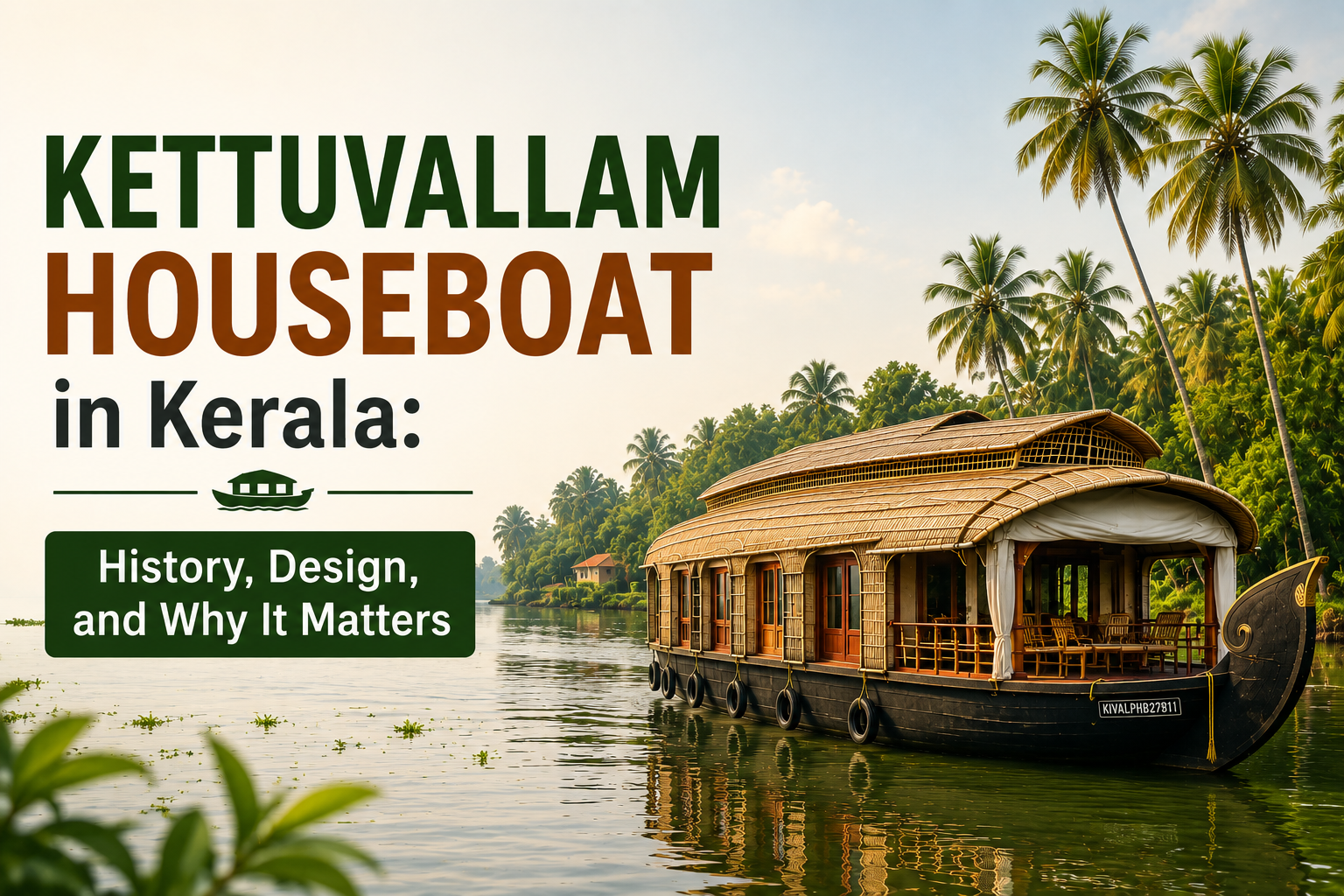
Long before it became a symbol of luxury backwater tourism, the Kettuvallam houseboat was a working vessel that carried the literal weight of Kerala’s economy on its wooden hull. Understanding where these boats came from, and how they’re built, transforms a simple houseboat cruise into something far more meaningful: a direct connection to centuries of craftsmanship, trade, and coastal life.
This guide traces the Kettuvallam’s journey from ancient cargo barge to celebrated cultural icon, exploring its construction, meaning, and why choosing an authentic experience matters if you want to understand Kerala’s backwaters beyond the surface.
Kettuvallam History: From Cargo Boat to Cultural Icon
Kettuvallam history stretches back centuries, with some accounts tracing early trade-route boatbuilding traditions in the region as far back as 3000 BC. For generations, these vessels served an entirely practical purpose: transporting rice, spices, and coconuts along Kerala’s extensive network of rivers and canals, connecting isolated interior villages to coastal markets.
As road transport gradually replaced water-based cargo movement through the 20th century, Kettuvallams faced near extinction, their original purpose rendered obsolete almost overnight. It wasn’t until the early 1990s that tourism entrepreneurs began reimagining these aging rice barges, adding bedrooms, bathrooms, and comfortable seating areas, transforming forgotten cargo vessels into what we now recognize as the modern Kerala backwater houseboat.
Kettuvallam Boat Meaning: What’s in a Name
The Kettuvallam boat meaning comes directly from Malayalam: “kettu” translates to “tied” or “bound,” while “vallam” means boat, together describing precisely how these vessels are constructed. This naming convention reflects the boat’s most distinctive engineering feature, one that sets it apart from virtually every other traditional watercraft.
Unlike most wooden boats built with nails or metal fasteners, a genuine Kettuvallam is entirely held together through binding: wooden planks tied with coir rope in an intricate knotting technique passed down through generations of master carpenters, traditionally known as Asaris.
Traditional Kerala Houseboat Design: How They’re Built
Traditional Kerala houseboat design follows a construction method that’s remained largely unchanged for centuries, relying entirely on natural, locally sourced materials:
- The wood — Hulls are built from planks of Anjili, or wild jackfruit wood, prized for its strength, durability, and natural resistance to water damage.
- The stitch — Carpenters drill holes through the wooden planks and thread coir rope, made from coconut husk fibers, through them, tying intricate knots that bind the entire hull together without a single nail.
- The seal — Once assembled, the seams are coated with a black resin made by boiling cashew nut shells, creating a waterproof finish that also gives traditional Kettuvallams their distinctive dark, rustic exterior.
- The roof — A curved, basket-like superstructure called the Valavara, woven from bamboo and dried palm leaves, provides shelter while maintaining the boat’s traditional silhouette.
This construction process demands considerable skill and patience, and genuine Kettuvallams are still handcrafted using these original techniques by artisans who’ve inherited the knowledge from previous generations.
Houseboat Construction Kerala: The Craftsmen Behind the Craft
Houseboat construction Kerala relies on a small, specialized community of skilled carpenters and coir rope makers whose expertise has been passed down within families for generations. This isn’t a trade easily learned from a manual; the precise knotting patterns, wood selection, and resin preparation require years of hands-on apprenticeship.
Choosing operators who genuinely preserve this construction heritage, rather than simply adopting the Kettuvallam’s outward appearance on a modern fiberglass or steel hull, matters significantly if authenticity is important to your experience. Vessels built using genuine traditional Kettuvallam construction methods directly support these artisans and help keep an endangered craft alive.
Kerala Rice Barge Boat: Understanding the Original Purpose
Before tourism reshaped their role, these vessels functioned purely as a Kerala rice barge boat, hauling agricultural produce and goods across the state’s dense network of backwaters. Large Kettuvallams, some reaching 60 to 100 feet in length, could carry substantial cargo loads, making them essential infrastructure for the region’s rice-growing communities, particularly in the low-lying paddy fields of the Kuttanad region.
This working history explains why traditional Kettuvallams have such a long, low-slung hull profile, a design optimized for stability and cargo capacity on calm inland waters, rather than speed or open-water performance.
Alleppey Houseboat: Where the Tradition Lives On Today
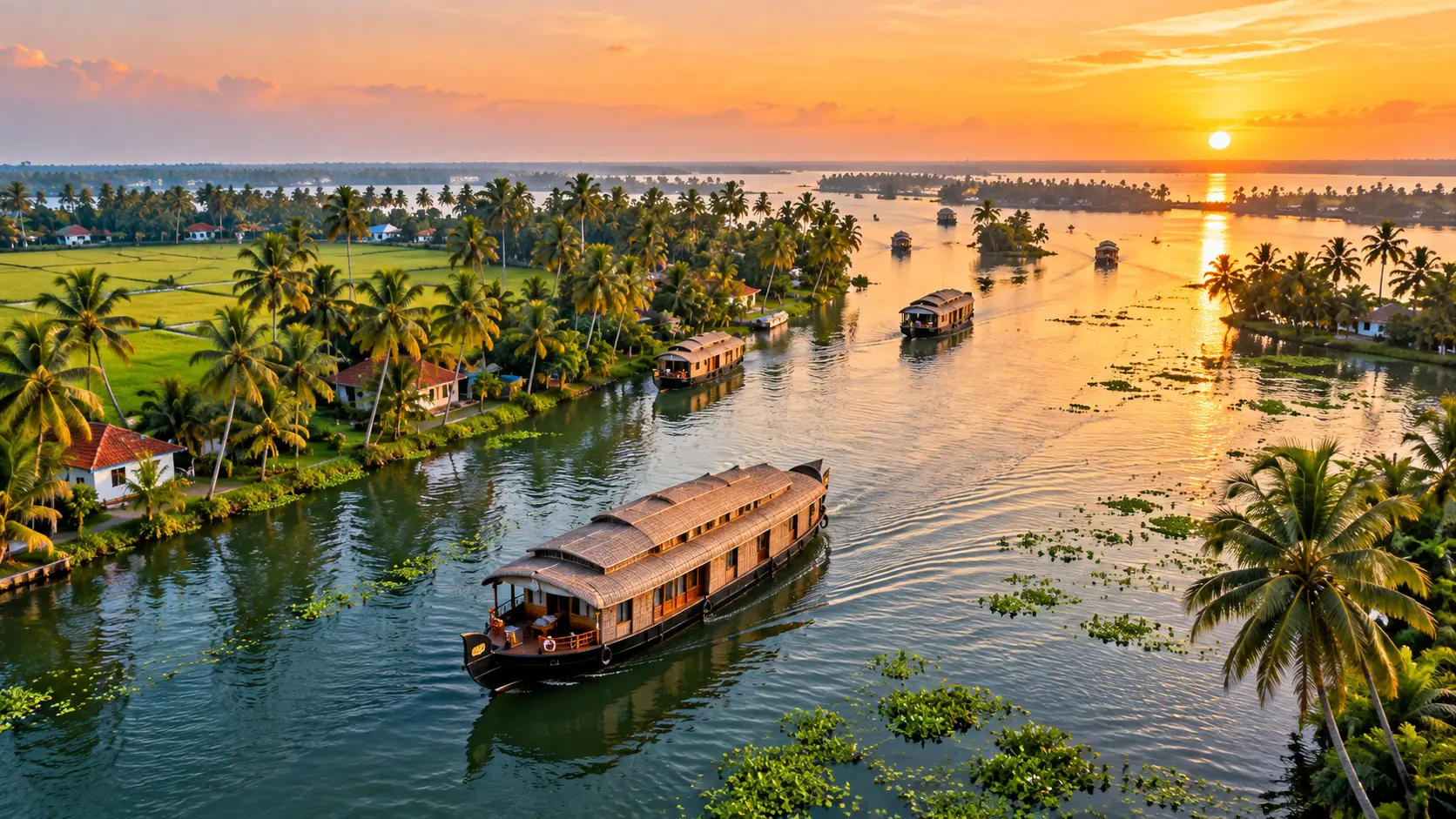
Today, the Alleppey houseboat industry represents the most visible and successful transformation of this heritage craft into a thriving tourism sector. Alappuzha, historically one of the most important trading hubs connected by Kerala’s backwater network, remains the epicenter of Kettuvallam tourism, hosting well over a thousand houseboats welcoming travelers from across the world.
This transformation hasn’t just preserved a cultural artifact; it’s created sustainable livelihoods for boat builders, coir rope makers, crew members, and countless small businesses along the backwaters that depend on tourism income.
Vembanad Lake Houseboat Routes: The Heart of the Experience
Many Kettuvallam journeys center around the Vembanad Lake houseboat routes, since Vembanad, India’s longest lake, connects several of Kerala’s most significant backwater destinations. Cruises departing from Alleppey often traverse sections of this vast lake system before winding through narrower canals surrounded by coconut groves, rice paddies, and small riverside villages.
This route diversity, moving between open lake views and intimate canal passages, gives travelers a genuine sense of the varied landscapes that shaped Kerala’s traditional water-based way of life.
Kerala Backwater Tourism: Balancing Heritage and Growth
Kerala backwater tourism has grown into one of the state’s most significant economic sectors since gaining international recognition in the late 20th century, but this growth has also raised important questions about sustainability and authenticity. As demand increased, many operators shifted toward faster, cheaper construction methods, using modern materials rather than traditional coir-and-wood techniques.
Travelers seeking a genuinely meaningful experience increasingly look for operators who maintain authentic construction practices and eco-conscious operations, including proper waste management and support for local artisan communities, rather than simply prioritizing volume. Reviewing detailed houseboat packages built around Alleppey, Kumarakom, and Kollam can help you compare operators who genuinely prioritize heritage.
Kettuvallam vs Modern Houseboat: What’s the Real Difference
Understanding Kettuvallam vs modern houseboat distinctions helps travelers make an informed choice. A genuine Kettuvallam maintains its traditional exterior, jackfruit wood hull, coir-rope binding, and cashew resin sealing, even while incorporating modern comforts like air conditioning, attached bathrooms, and contemporary interior furnishings inside.
A purely “modern” houseboat, by contrast, may abandon traditional materials and construction methods entirely, built instead with conventional marine materials that prioritize speed of production over cultural authenticity. Neither approach is inherently wrong, but travelers specifically interested in craftsmanship and heritage should ask directly about construction methods before booking. You can explore how this balance plays out across our 1-bedroom and 2-bedroom fleet options, each built on traditional Kettuvallam hulls with modern interiors.
Frequently Asked Questions
1. What does the word Kettuvallam actually mean?
Kettuvallam comes from the Malayalam words “kettu” (tied) and “vallam” (boat), directly referring to the traditional construction method of binding wooden planks together with coir rope rather than nails.
2. What wood is traditionally used to build a Kettuvallam?
Traditional Kettuvallams are built primarily from Anjili, or wild jackfruit wood, chosen for its strength, natural durability, and resistance to water damage over long periods.
3. Are Kettuvallams still built using traditional methods today?
Yes, authentic Kettuvallams continue to be handcrafted using the original stitch-and-knot method with coir rope and cashew resin sealing, though this traditional craftsmanship now exists alongside more modern, mass-produced houseboat construction.
4. What were Kettuvallams originally used for before tourism?
Kettuvallams originally served as cargo barges, transporting rice, spices, and coconuts along Kerala’s backwaters between rural villages and coastal trading markets.
5. Is there a real difference between a traditional Kettuvallam and a modern houseboat?
Yes, a genuine Kettuvallam retains traditional construction elements like jackfruit wood and coir-rope binding, while purely modern houseboats often use conventional marine construction materials without these traditional techniques.
Final Thoughts on the Kettuvallam Houseboat’s Living Legacy
The Kettuvallam houseboat represents far more than a comfortable place to sleep on Kerala’s backwaters, it’s a living piece of maritime heritage, shaped by generations of skilled artisans and centuries of trade history. Choosing to experience an authentically built Kettuvallam means supporting the craftsmen and traditions that keep this remarkable story afloat, quite literally, for generations still to come.
Roja Houseboats
Udayalayam, Ponnad (PO), Mannancherry, Alappuzha – 688538
Phone: +91 99478 77537 | Email: rojahouseboat@gmail.com