
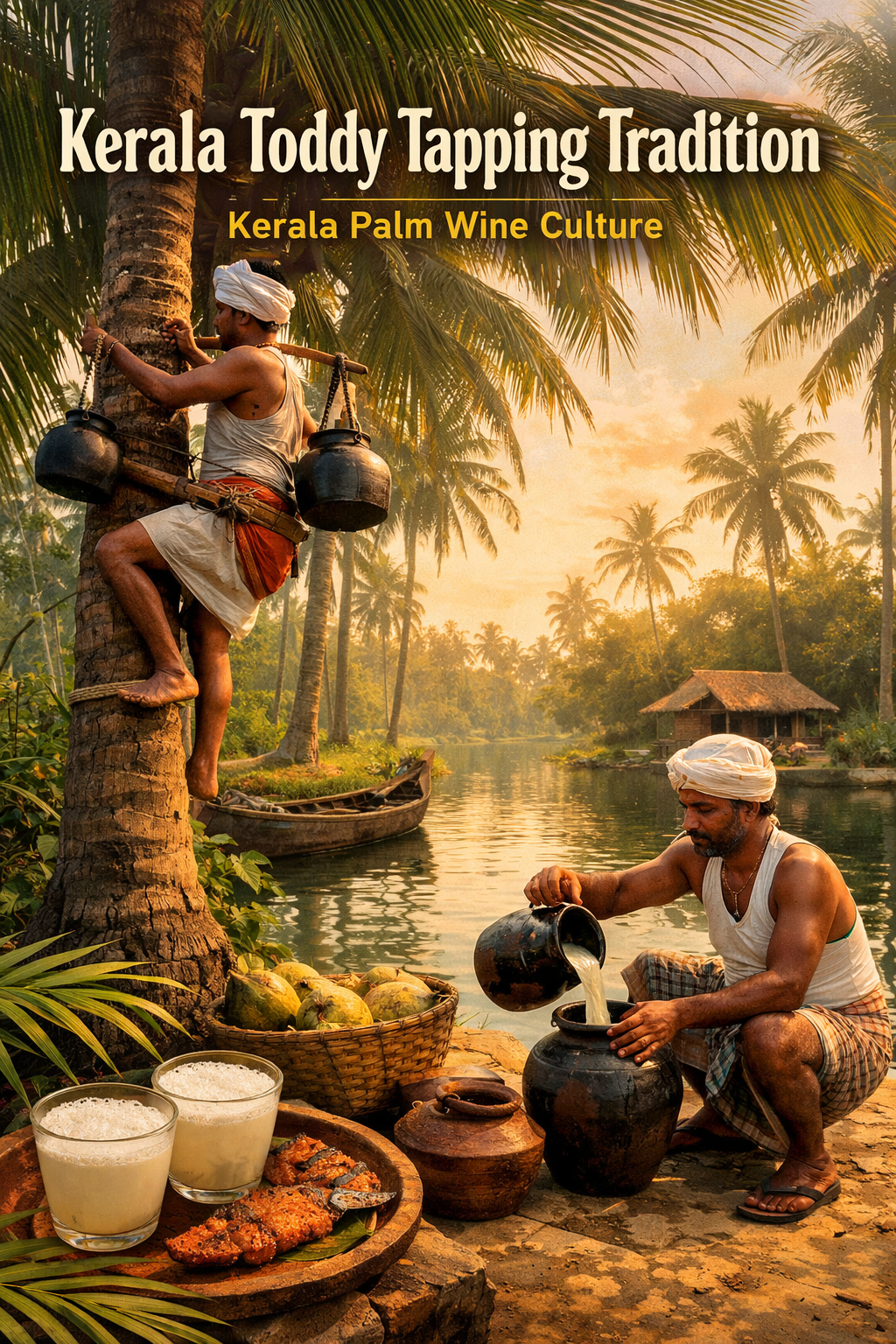
Kerala Toddy Tapping Tradition is one of the most fascinating cultural practices that travelers can experience in the beautiful state of Kerala, India. For both domestic and international tourists, this age-old practice offers a glimpse into the local lifestyle, village economy, and culinary heritage that has existed for centuries.
Known locally as “Kallu,” toddy is a naturally fermented drink extracted from coconut or palm trees. The process of collecting this drink is not just an occupation—it is an art passed down through generations. Through this tradition, visitors can explore the authentic Kerala Palm Wine Culture and understand how rural communities maintain their deep connection with nature.
What is the Kerala Toddy Tapping Tradition?
The Kerala Toddy Tapping Tradition refers to the process of collecting sap from coconut or palm trees and allowing it to ferment naturally into toddy. This practice has been a part of Kerala’s rural life for hundreds of years.
Skilled workers known as toddy tappers climb tall coconut trees—often without modern equipment—to collect fresh sap from the flower buds. This sap slowly ferments to become toddy, a mildly alcoholic beverage widely consumed in local toddy shops and village eateries.
For tourists exploring Kerala, witnessing Traditional Toddy Tapping in Kerala is both educational and exciting. It showcases the remarkable skills of local workers who balance tradition, agility, and experience while performing this daily task.
A Deep Connection with Kerala Palm Wine Culture
The Kerala Palm Wine Culture is deeply rooted in the region’s history, food traditions, and social life. Toddy has long been part of Kerala’s culinary heritage, often paired with spicy seafood, tapioca dishes, and traditional village meals.
Visitors to Kerala often discover that toddy shops are not merely places to drink. They are cultural spaces where locals gather, share stories, and enjoy authentic regional cuisine. These establishments serve traditional dishes such as fish curry, prawn fry, crab roast, and tapioca with chutney.
Experiencing Traditional Toddy Tapping in Kerala helps travelers appreciate how food, agriculture, and culture are interconnected in this region.
How Toddy is Collected from Palm Trees
The process involved in the Kerala Toddy Tapping Tradition requires precision and experience. A toddy tapper begins early in the morning by climbing a coconut tree that can reach heights of 20–30 meters.
Once at the top, the tapper carefully slices the flower bud of the coconut tree and attaches a small clay pot or container. The sweet sap slowly drips into this container throughout the day.
Later, the collected sap naturally ferments and becomes toddy. Fresh toddy is mildly sweet, while fermented toddy has a slightly sour taste and mild alcohol content. Watching Traditional Toddy Tapping in Kerala demonstrates how nature and traditional knowledge work together to produce this unique beverage.
Where Tourists Can Experience Toddy Culture
Travelers interested in the Kerala Toddy Tapping Tradition can explore several regions where this practice remains active. Popular destinations include village areas in Alappuzha, Kottayam, Kollam, and parts of Ernakulam.
These areas are famous for their lush coconut groves and vibrant backwater landscapes. Many tourists visiting Kerala’s backwaters encounter toddy tapping demonstrations or authentic toddy shops that showcase the region’s Kerala Palm Wine Culture.
Some eco-tourism villages and cultural tours even include toddy tapping experiences as part of their itineraries, giving visitors an opportunity to learn directly from local tappers.
Why Traditional Toddy Tapping in Kerala is Unique
There are many reasons why Traditional Toddy Tapping in Kerala stands out as a unique cultural experience. Unlike industrial alcohol production, toddy tapping is entirely natural and sustainable.
The practice relies on manual skills, respect for the environment, and knowledge passed through generations. Many toddy tappers inherit the profession from their families and begin learning the craft at a young age.
Through the Kerala Toddy Tapping Tradition, visitors witness how rural communities maintain harmony with nature while preserving their cultural identity.
Cultural and Economic Importance
The Kerala Toddy Tapping Tradition also plays an important role in supporting the rural economy. Thousands of families depend on toddy tapping and toddy shop businesses for their livelihood.
Additionally, toddy tourism has become an emerging interest among travelers seeking authentic cultural experiences. Exploring Kerala Palm Wine Culture allows tourists to go beyond typical sightseeing and discover everyday traditions that define the region.
Government regulations and cooperative societies also help maintain quality standards and support toddy workers, ensuring that the tradition continues responsibly.
Responsible Tourism and Authentic Experiences
Tourists who want to explore the Kerala Toddy Tapping Tradition should always choose licensed toddy shops and cultural tours. Responsible tourism ensures that visitors enjoy authentic experiences while supporting local communities.
Learning about Traditional Toddy Tapping in Kerala helps travelers understand the dedication and hard work involved in maintaining this heritage practice. It also encourages respect for the local culture and traditions.
By engaging with local guides and visiting village communities, tourists can gain a deeper appreciation of the Kerala Palm Wine Culture and its significance in everyday life.
Conclusion
The Kerala Toddy Tapping Tradition is much more than a method of producing palm wine. It is a living cultural heritage that reflects Kerala’s connection with nature, local craftsmanship, and community life.
For domestic and international tourists, experiencing Traditional Toddy Tapping in Kerala offers a rare opportunity to witness an age-old skill that continues to thrive in modern times. From climbing coconut trees to tasting fresh toddy and traditional dishes, the experience reveals the heart of Kerala’s village culture.
Exploring the vibrant Kerala Palm Wine Culture allows travelers to understand why Kerala is not only famous for its backwaters and beaches but also for its deeply rooted traditions that make every visit memorable.