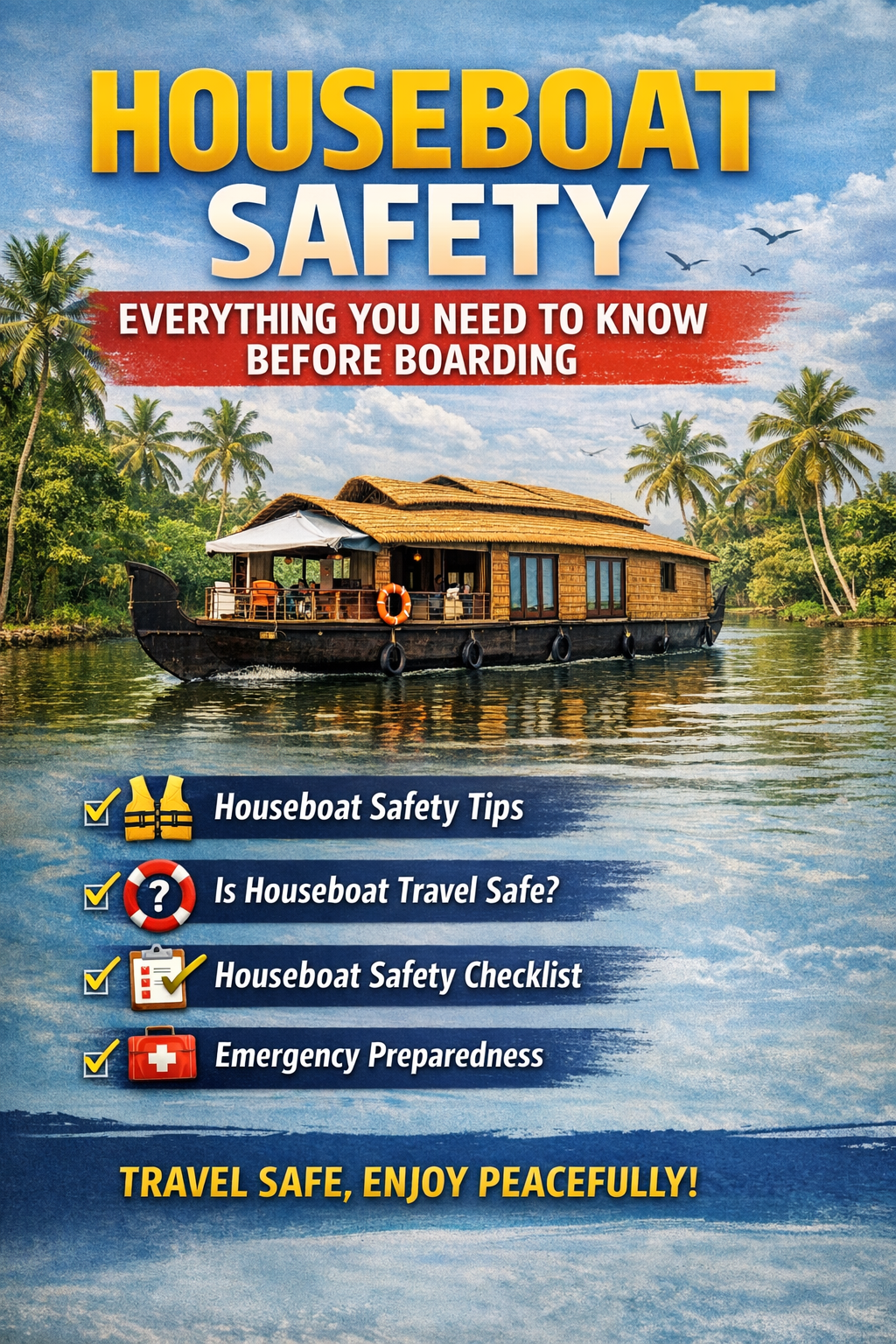
Houseboat Safety is the first thing every traveler should understand before stepping onto a floating home. Whether you are exploring the serene backwaters of Alleppey, cruising through the scenic stretches of Kerala Backwaters, or enjoying a houseboat holiday anywhere in the world, safety awareness ensures a peaceful and memorable journey.
For Indian families, honeymooners, solo travelers, and international tourists alike, houseboats offer a unique blend of comfort and culture. But like any travel experience, preparation matters. This guide explains everything clearly and practically—so you can board with confidence.
Is Houseboat Travel Safe? Understanding the Basics
One of the most common questions travelers ask is: Is Houseboat Travel Safe?
The short answer is yes—when operated by licensed providers who follow maritime regulations. Most professional houseboat operators follow strict guidelines regarding:
- Certified captains and trained crew
- Regular boat maintenance
- Fire safety compliance
- Life-saving equipment availability
- Weather monitoring systems
However, safety standards can vary between operators. That is why informed decision-making is important.
Why Houseboat Safety Matters for Every Traveler
Houseboats operate on lakes, rivers, or backwaters. Even in calm waters, responsible safety practices prevent accidents and ensure a stress-free journey.
Key reasons to prioritize safety:
- Water-based travel involves environmental factors
- Families may travel with children or elderly members
- International travelers may be unfamiliar with local safety norms
- Emergency response access may differ from city hotels
Understanding basic safety measures allows you to relax and enjoy the experience.
Essential Houseboat Safety Tips Before Boarding
Here are practical Houseboat Safety Tips every traveler should follow:
1. Choose a Licensed Operator
Always book with registered and reviewed operators. Verify:
- License and registration numbers
- Online reviews
- Transparent contact information
- Safety certifications
2. Check Life-Saving Equipment
Before departure, confirm the availability of:
- Life jackets (in correct sizes)
- Life buoys
- First-aid kit
- Fire extinguishers
3. Attend the Safety Briefing
Professional crews provide short safety demonstrations. Pay attention, even if you are an experienced traveler.
4. Monitor Weather Conditions
Avoid boarding during:
- Heavy rainfall
- Storm alerts
- Strong wind warnings
Most operators reschedule trips if conditions are unsafe.
5. Follow Crew Instructions
Crew members understand water currents and navigation rules. Cooperation ensures everyone’s safety.
Houseboat Safety Checklist Before You Step Onboard
Use this quick Houseboat Safety Checklist to stay prepared:
✔ Confirm operator license
✔ Verify emergency contact numbers
✔ Inspect visible safety gear
✔ Check cleanliness and maintenance
✔ Understand emergency exit routes
✔ Keep personal valuables secure
✔ Inform crew of medical conditions
✔ Carry necessary medications
Keeping this checklist handy helps both domestic and international tourists feel more confident.
Safety Measures Followed in Kerala Houseboats
In regions like Alleppey, houseboats are regulated by local tourism and maritime authorities. Many reputable operators:
- Conduct routine hull inspections
- Maintain electrical safety standards
- Provide GPS navigation systems
- Train staff in basic emergency response
For global visitors unfamiliar with Indian waterways, these standards ensure reassurance and professionalism.
Onboard Fire and Electrical Safety
Fire safety is an essential part of Houseboat Safety.
Most houseboats include:
- Fire extinguishers in kitchen and cabin areas
- Smoke detectors
- Safe LPG storage systems
- Controlled generator usage
Avoid:
- Smoking in restricted areas
- Overloading electrical sockets
- Using unauthorized appliances
Health and Hygiene Standards
Safety also includes hygiene. Clean drinking water, proper food storage, and sanitized cabins protect travelers from illness.
Before boarding:
- Ask about kitchen hygiene
- Check if food is freshly prepared
- Confirm clean bedding and washrooms
International travelers should also drink bottled or filtered water provided onboard.
Safety for Children and Elderly Travelers
Family travel requires extra attention.
Recommendations:
- Ensure children wear life jackets when near open decks
- Supervise kids at all times
- Confirm stable handrails
- Avoid running on wet surfaces
- Request ground-floor cabins for elderly guests
These small precautions significantly enhance safety.
Emergency Preparedness on a Houseboat
Professional operators prepare for emergencies through:
- Communication systems
- Nearby docking points
- Medical assistance contacts
- Trained staff
Travelers should:
- Save emergency numbers in phones
- Share itinerary with family
- Keep personal ID accessible
Preparedness improves response time if needed.
Cultural Awareness for International Visitors
For overseas travelers, houseboat experiences may include local cuisine and traditional environments. Understanding cultural practices enhances comfort and safety.
In destinations like Kerala Backwaters, removing footwear indoors and respecting local customs is common. Ask the crew if unsure.
Weather Awareness and Seasonal Travel
Water conditions vary by season.
- Peak tourist season: calm waters, pleasant weather
- Monsoon season: heavy rainfall, limited cruising
- Summer: warmer temperatures
Always consult your operator about seasonal conditions before booking.
Insurance and Documentation
For international tourists:
- Travel insurance covering water activities is recommended
- Keep passport copies secure
- Carry visa documentation
Domestic travelers should also keep valid identification.
Responsible Behavior Onboard
Your behavior contributes to overall safety:
- Avoid leaning over railings
- Do not swim without permission
- Consume alcohol responsibly
- Keep decks clutter-free
Safe conduct ensures everyone enjoys the journey.
Sustainable and Safe Tourism Practices
Sustainability supports long-term safety:
- Avoid littering in waterways
- Respect wildlife
- Choose eco-certified houseboats
- Minimize plastic use
Responsible tourism protects natural ecosystems and improves future travel safety standards.
Final Thoughts on Houseboat Safety
Houseboat Safety is not complicated—but it requires awareness, preparation, and choosing the right operator. Whether you are an Indian traveler exploring the backwaters or an international tourist discovering India’s waterways, understanding safety protocols ensures a peaceful experience.
By following simple Houseboat Safety Tips, reviewing your Houseboat Safety Checklist, and asking the right question—Is Houseboat Travel Safe—you can confidently step aboard and enjoy one of the most unique tourism experiences in the world.
Safe travel begins with informed travel.