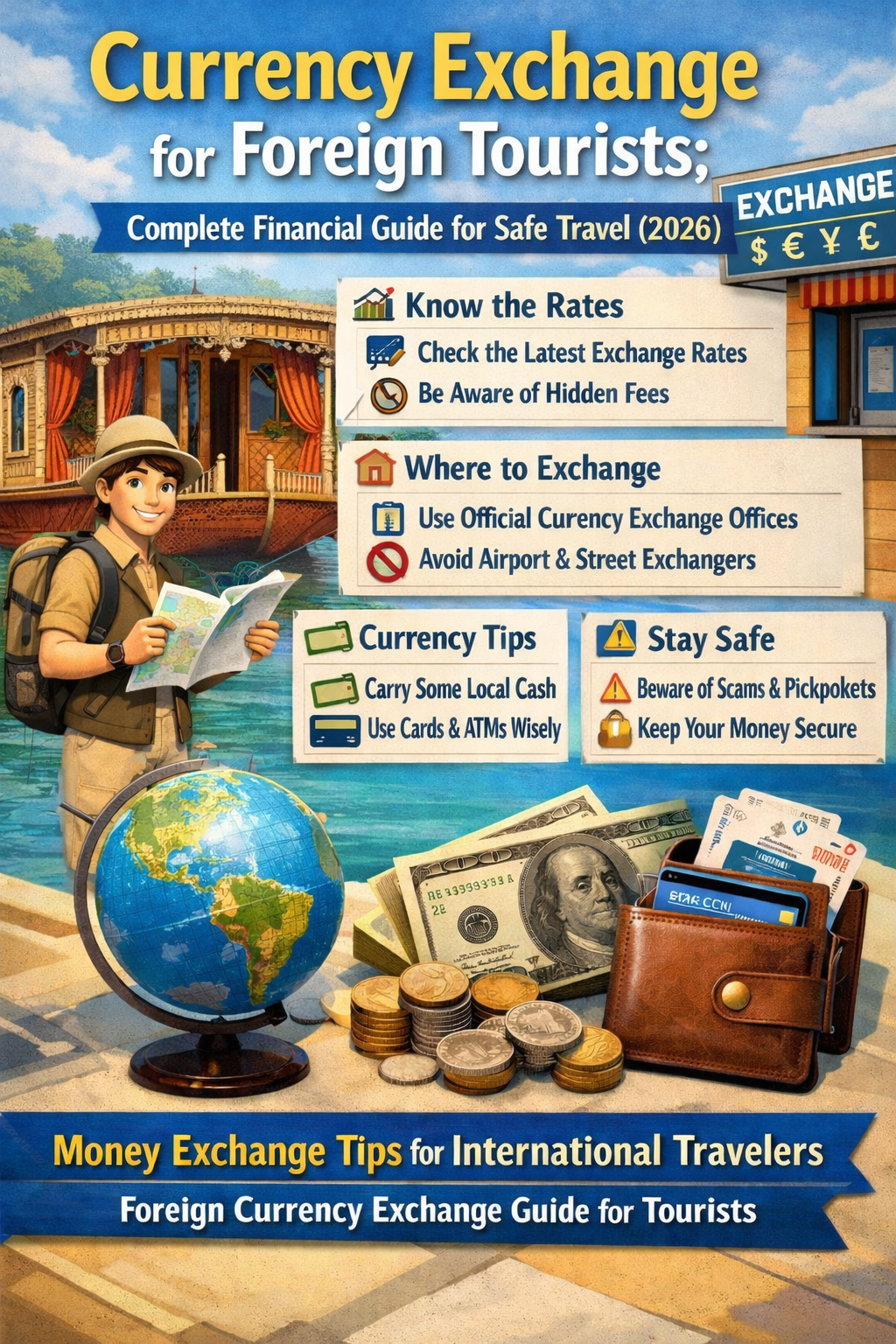
Currency Exchange for Foreign Tourists is one of the most important aspects of planning a smooth and stress-free trip. Whether you’re visiting India or traveling abroad, understanding how money works in a new country helps you avoid unnecessary fees, scams, and confusion.
This guide is designed for both domestic and international travelers, offering practical insights, expert-backed advice, and real-world strategies. Along the way, we’ll also cover Money Exchange Tips for International Travelers and provide a complete Foreign Currency Exchange Guide for Tourists to help you manage your finances with confidence.
WHY CURRENCY EXCHANGE MATTERS IN TRAVEL
When traveling internationally, your home currency may not be accepted everywhere. This makes exchanging money essential for daily expenses like transportation, food, accommodation, and shopping.
Poor exchange decisions can lead to:
High conversion fees
Unfavorable exchange rates
Risk of fraud or counterfeit currency
That’s why following a reliable Foreign Currency Exchange Guide for Tourists ensures your travel budget stays intact.
UNDERSTANDING HOW CURRENCY EXCHANGE WORKS
Currency exchange involves converting one country’s money into another. Rates fluctuate daily based on global markets, demand, and economic stability.
Key terms to know:
Exchange Rate – Value of one currency compared to another
Buy Rate / Sell Rate – The rate at which money changers buy or sell currency
Service Fee – Additional charges for the transaction
Understanding these basics is a crucial part of Currency Exchange for Foreign Tourists and helps you make informed financial decisions.
BEST PLACES TO EXCHANGE MONEY
Choosing the right place can significantly impact how much value you get.
1. Authorized Money Exchange Centers
Licensed exchange providers often offer competitive rates and transparency.
2. Banks
Safe and reliable, though sometimes with higher fees.
3. Airports
Convenient but usually offer the least favorable rates—best for small amounts only.
4. Hotels
Some hotels provide exchange services, but rates may not be ideal.
A smart Money Exchange Tips for International Travelers approach is to compare rates before exchanging large sums.
CASH VS DIGITAL PAYMENTS
Modern travelers have multiple options beyond cash.
Cash
Widely accepted in local markets
Necessary in rural areas
Cards & Digital Wallets
Convenient and secure
May include foreign transaction fees
In countries like India, digital payments are rapidly growing, but cash is still essential in many places. Balancing both is key in any Foreign Currency Exchange Guide for Tourists.
SMART MONEY EXCHANGE TIPS FOR INTERNATIONAL TRAVELERS
Here are practical Money Exchange Tips for International Travelers to help you save money and stay secure:
1. Avoid Airport Exchanges for Large Amounts
Use them only for immediate needs.
2. Inform Your Bank Before Travel
Prevents card blocks due to unusual international transactions.
3. Use ATMs Wisely
Withdraw local currency from bank-affiliated ATMs for better rates.
4. Keep Small Denominations
Useful for taxis, tips, and small purchases.
5. Track Exchange Rates
Use apps or online tools to monitor favorable rates.
6. Avoid Dynamic Currency Conversion
Always pay in local currency instead of your home currency.
These strategies strengthen your approach to Currency Exchange for Foreign Tourists and reduce unnecessary losses.
COMMON MISTAKES TO AVOID
Even experienced travelers make financial mistakes. Avoid these pitfalls:
Exchanging all money at once
Ignoring hidden fees
Carrying too much cash
Using unauthorized exchange agents
Not keeping transaction receipts
Following a structured Foreign Currency Exchange Guide for Tourists helps you avoid these risks.
SAFETY TIPS FOR HANDLING MONEY ABROAD
Security is just as important as saving money.
Use anti-theft wallets
Split cash into different locations
Avoid counting money in public
Use hotel safes for large amounts
Monitor bank statements regularly
These precautions are essential in any Currency Exchange for Foreign Tourists plan.
BUDGETING FOR YOUR TRIP
Effective budgeting ensures you don’t overspend.
Daily Budget Planning
Estimate costs for:
Food
Transport
Accommodation
Activities
Emergency Fund
Always keep backup funds in a separate account or card.
Combining budgeting with smart Money Exchange Tips for International Travelers ensures financial stability throughout your journey.
CURRENCY EXCHANGE IN INDIA: WHAT TOURISTS SHOULD KNOW
If you’re visiting India:
The local currency is the Indian Rupee (INR)
Currency exchange is available at airports, banks, and authorized dealers
Digital payments like UPI are widely used in cities
Carry ID proof when exchanging money
India offers a mix of traditional and modern payment systems, making it an interesting case for any Foreign Currency Exchange Guide for Tourists.
FINAL THOUGHTS
Mastering Currency Exchange for Foreign Tourists is not just about converting money—it’s about making smart financial decisions that enhance your travel experience.
By following trusted Money Exchange Tips for International Travelers and using this Foreign Currency Exchange Guide for Tourists, you can:
Maximize your budget
Avoid unnecessary fees
Travel with confidence and security
Whether you’re exploring Kerala, traveling across India, or visiting another country, being financially prepared ensures a smooth and enjoyable journey.