Kerala Backwaters Ecosystem is one of India’s most extraordinary natural treasures, attracting travelers from around the world. Stretching across tranquil lakes, interconnected canals, lagoons, and rivers along the Arabian Sea coast, this delicate wetland network offers much more than scenic beauty. For both domestic and international tourists, it represents a living ecological system where biodiversity, traditional livelihoods, and responsible tourism coexist.
From peaceful houseboat cruises to birdwatching at sunrise, exploring this ecosystem allows visitors to experience nature in its purest form while understanding the importance of sustainability.
Understanding the Kerala Backwaters Ecosystem
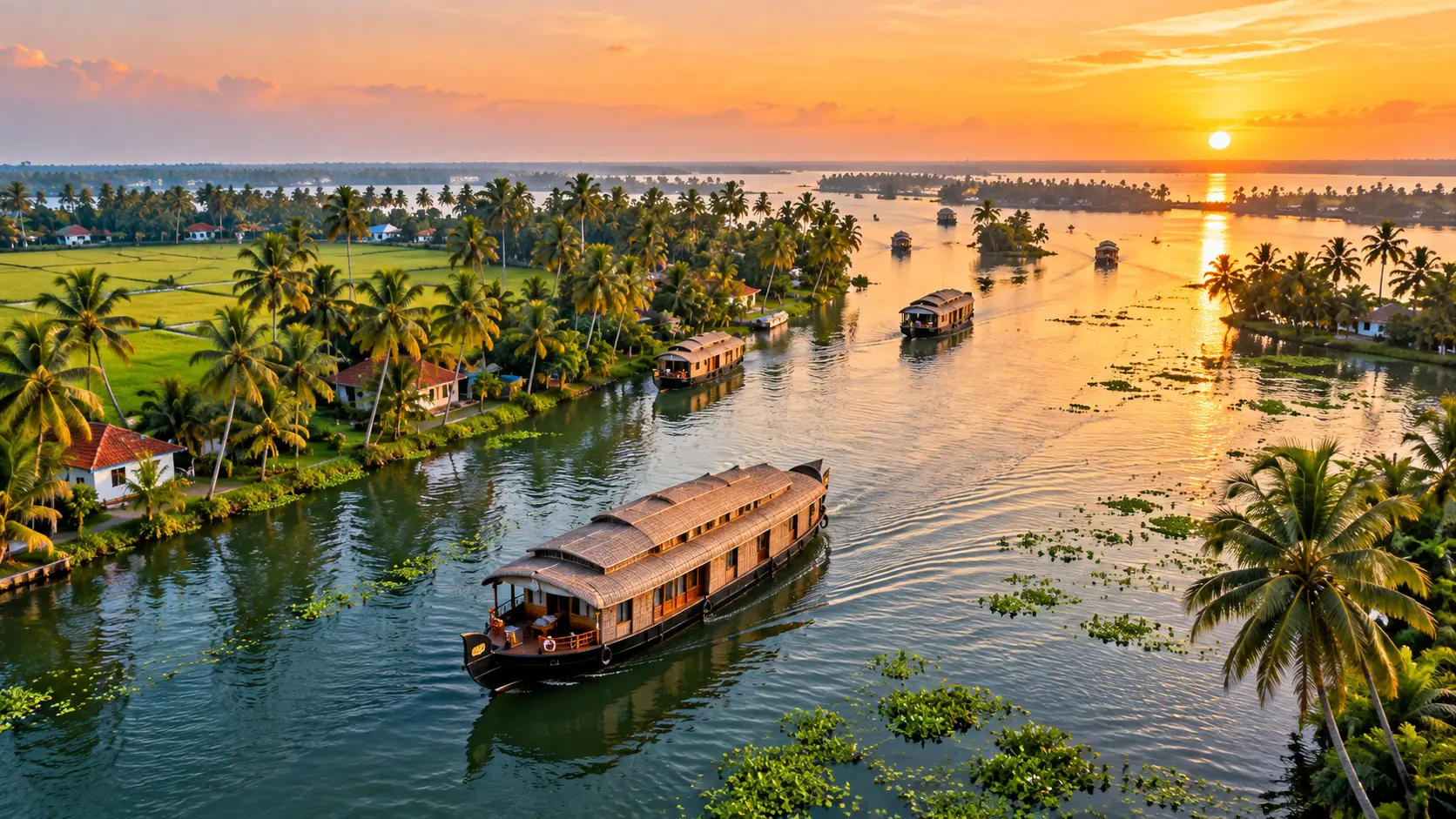
The Kerala Backwaters Ecosystem spans several districts, with the most prominent regions located around Alappuzha and Kumarakom. The vast Vembanad Lake, the longest lake in India, forms the heart of this ecosystem.
This network consists of:
- Brackish water lagoons
- Freshwater rivers
- Mangrove forests
- Paddy fields below sea level
- Coconut-lined canals
These wetlands play a crucial role in:
- Regulating floods
- Supporting fisheries
- Maintaining groundwater balance
- Providing livelihoods to thousands of local families
For tourists, understanding this ecological importance enhances the travel experience beyond sightseeing.
Flora and Fauna of Kerala Backwaters
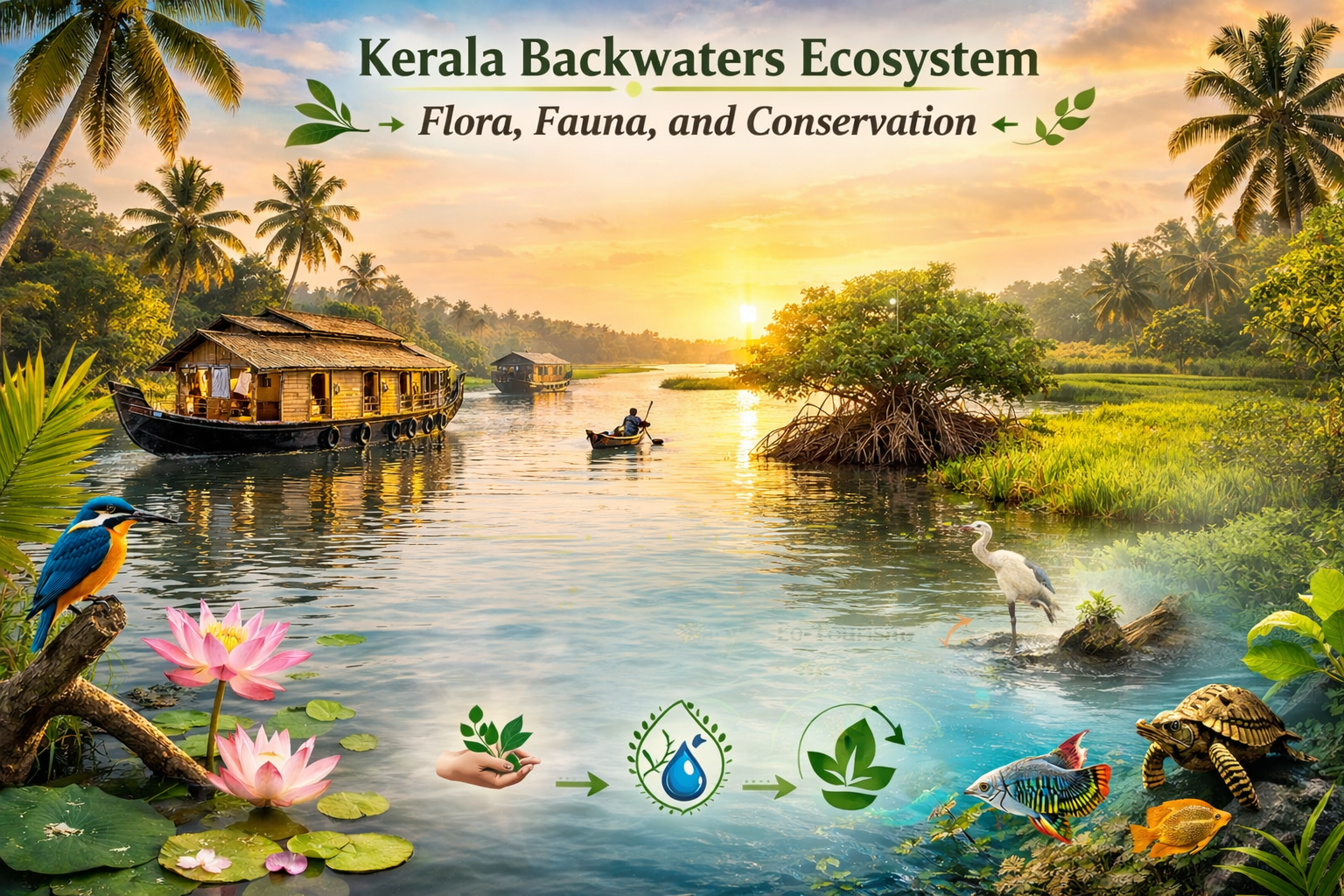
The Flora and Fauna of Kerala Backwaters are incredibly diverse and vital to maintaining ecological balance.
Flora (Plant Life)
The plant life here is specially adapted to wet and saline conditions. You will commonly find:
- Mangrove forests that protect shorelines from erosion
- Coconut palms lining canals
- Water lilies and lotus plants floating on calm waters
- Paddy fields cultivated using traditional farming methods
Mangroves are particularly important as they act as natural barriers against storms and serve as breeding grounds for aquatic species.
Fauna (Wildlife)
The Flora and Fauna of Kerala Backwaters together create a thriving habitat for many species:
Birds:
The region is home to migratory and resident birds such as:
- Kingfishers
- Egrets
- Herons
- Cormorants
Bird lovers often visit the Kumarakom Bird Sanctuary, a protected area that supports numerous bird species throughout the year.
Aquatic Life:
- Freshwater fish
- Crabs and prawns
- Pearl spot fish (Karimeen), a local delicacy
Reptiles and Mammals:
- Water snakes
- Turtles
- Otters (rare but present in certain regions)
For eco-conscious travelers, observing wildlife respectfully ensures the ecosystem remains undisturbed.
Kerala Backwaters Conservation Efforts
Sustainable tourism is essential to protect this fragile environment. Over the years, several Kerala Backwaters Conservation Efforts have been introduced by government bodies, environmental organizations, and local communities.
1. Responsible Houseboat Tourism
Houseboats are a major attraction in Alappuzha. However, regulations now encourage:
- Proper waste management systems
- Eco-friendly engines
- Limited plastic usage
- Sewage treatment compliance
These measures reduce water pollution and protect aquatic biodiversity.
2. Mangrove Protection Programs
Mangrove restoration is a key part of Kerala Backwaters Conservation Efforts. Local authorities promote planting initiatives to strengthen natural coastal defenses and maintain breeding habitats.
3. Community-Based Tourism
Local communities play a direct role in sustainable tourism by:
- Offering homestays
- Conducting canoe tours
- Promoting traditional fishing practices
- Encouraging organic farming
This approach supports economic growth without damaging the ecosystem.
4. Wetland Protection Policies
The Kerala Backwaters Ecosystem is recognized as an ecologically sensitive wetland region. Conservation policies focus on:
- Preventing illegal land reclamation
- Monitoring pollution levels
- Protecting biodiversity zones
- Promoting environmental awareness among tourists
Travelers can contribute by choosing certified eco-friendly operators and avoiding littering.
Why the Kerala Backwaters Ecosystem Matters to Tourists
For domestic tourists, the backwaters offer a peaceful retreat from busy urban life. For international travelers, it represents a unique tropical wetland experience rarely found elsewhere in the world.
The Kerala Backwaters Ecosystem provides:
- Authentic cultural experiences
- Scenic landscapes
- Wildlife exploration
- Sustainable travel opportunities
- Traditional cuisine featuring local fish
More importantly, visiting responsibly ensures future generations can enjoy the same beauty.
Best Time to Visit
The ideal period to explore the Kerala Backwaters Ecosystem is between October and March. The weather remains pleasant, humidity is lower, and migratory birds are visible.
Monsoon season (June to September) offers lush greenery but may limit certain activities.
Responsible Travel Tips
To support Kerala Backwaters Conservation Efforts, tourists should:
- Avoid single-use plastics
- Respect wildlife habitats
- Choose eco-certified houseboats
- Support local businesses
- Follow designated water routes
Even small actions can make a meaningful difference.
Frequently Asked Questions (AEO Optimized)
What makes the Kerala Backwaters Ecosystem unique?
Its combination of brackish lagoons, freshwater rivers, mangroves, and rich biodiversity makes it one of the most distinctive wetland systems in India.
Are the Kerala backwaters safe for international tourists?
Yes, the region is tourist-friendly with regulated houseboat services and well-developed hospitality infrastructure.
How are the Flora and Fauna of Kerala Backwaters protected?
Through mangrove restoration, pollution control measures, wildlife protection zones, and responsible tourism policies.
How can tourists support Kerala Backwaters Conservation Efforts?
By choosing eco-friendly accommodations, reducing waste, and respecting local environmental guidelines.
Conclusion
The Kerala Backwaters Ecosystem is not just a tourist destination—it is a living, breathing network of wetlands that supports biodiversity, culture, and livelihoods. Understanding the Flora and Fauna of Kerala Backwaters and actively supporting Kerala Backwaters Conservation Efforts allows travelers to experience its beauty responsibly.
Whether you are a domestic traveler seeking tranquility or an international tourist exploring India’s natural wonders, the backwaters offer an unforgettable journey—one that thrives on harmony between nature and responsible tourism.